When Hurricane Milton passed over Hillsborough County in October 2024, power went out at about 700 of the county's nearly 900 wastewater lift stations. Stormwater also found its way into the collection system, and local reporting described manhole overflows and sewage backing up into some homes. The National Hurricane Center's report put Milton's rainfall at 11.91 inches in Riverview.
You cannot prevent a storm. You can know where the weak points are in your own house.
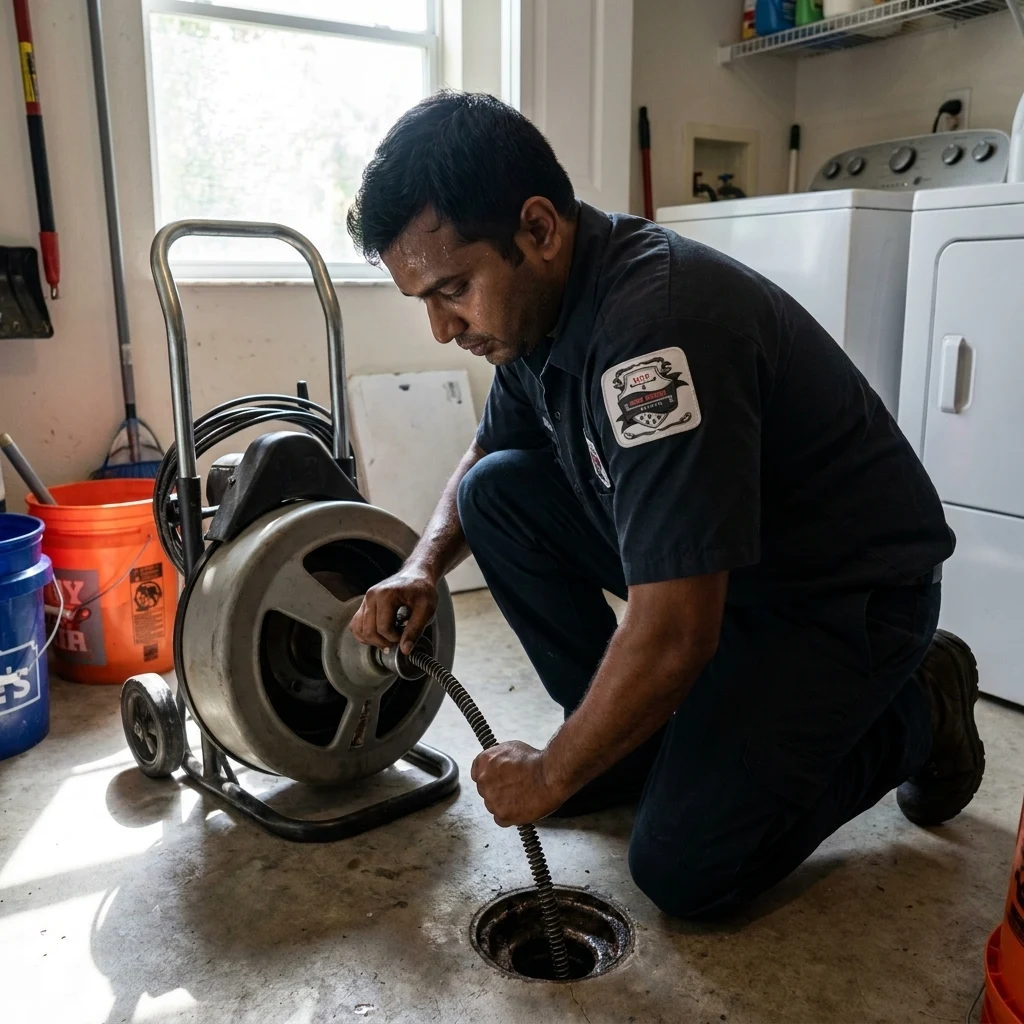
What a Lift Station Has to Do With Your Drain
Gravity sewers need slope, and where the ground does not supply it, lift stations are pumps that raise wastewater to the next gravity segment. When power is lost, pumps stop and wastewater has nowhere to go but back up the system toward the lowest openings, which are often floor drains and tubs. The county is building a large replacement backbone, including the Balm Road Super Lift Station rated at 56 million gallons a day, but that is the public side.
September 2024's Helene shows the same pattern further south: flooding damaged the pumping system serving Apollo Beach and Ruskin, and the county reported it restored on September 28. Low ground matters too. Apollo Beach sits at about 7 feet of elevation and Ruskin at about 3.3 feet.
Backflow Valves: What They Do and Do Not Do
The county lists installing sewer backflow valves among its suggested property protections and gives Public Works at (813) 635-5400 as a contact. A backflow valve is a flap or gate fitted into the house line. Water flows out through it normally; if flow reverses, it closes.
- It helps keep the street's flow from coming up through your lowest fixtures.
- It does not let your own water leave while closed, so heavy use during a backup just fills the house line.
- It needs upkeep. Debris can hold a flap open, so it should be inspected on the maker's schedule.
- It is a licensed plumber's installation. We do not install valves. We can clear and camera the line on the house side before or after.
A Pre-Season Routine for Riverview Homes
- Locate the cleanout and make sure it is not buried under mulch or sod.
- Book a camera baseline. A stand-alone sewer camera inspection is $150 to $300.
- Check low fixtures. Garage floor drains, laundry standpipes and rarely used showers collect lint and silt; clear them and run water to keep traps full. Drain cleaning covers these.
- Look up your evacuation zone. The county's A through E zones differ from flood zones, mobile and manufactured homes are all in Zone A, and the lookup is at HCFL.gov/HEAT.
- Save two numbers: Water Resources, (813) 307-1000, and ours, 813-733-7188.
- Ask your insurance agent how your policy treats sewer backup, before the season rather than after.
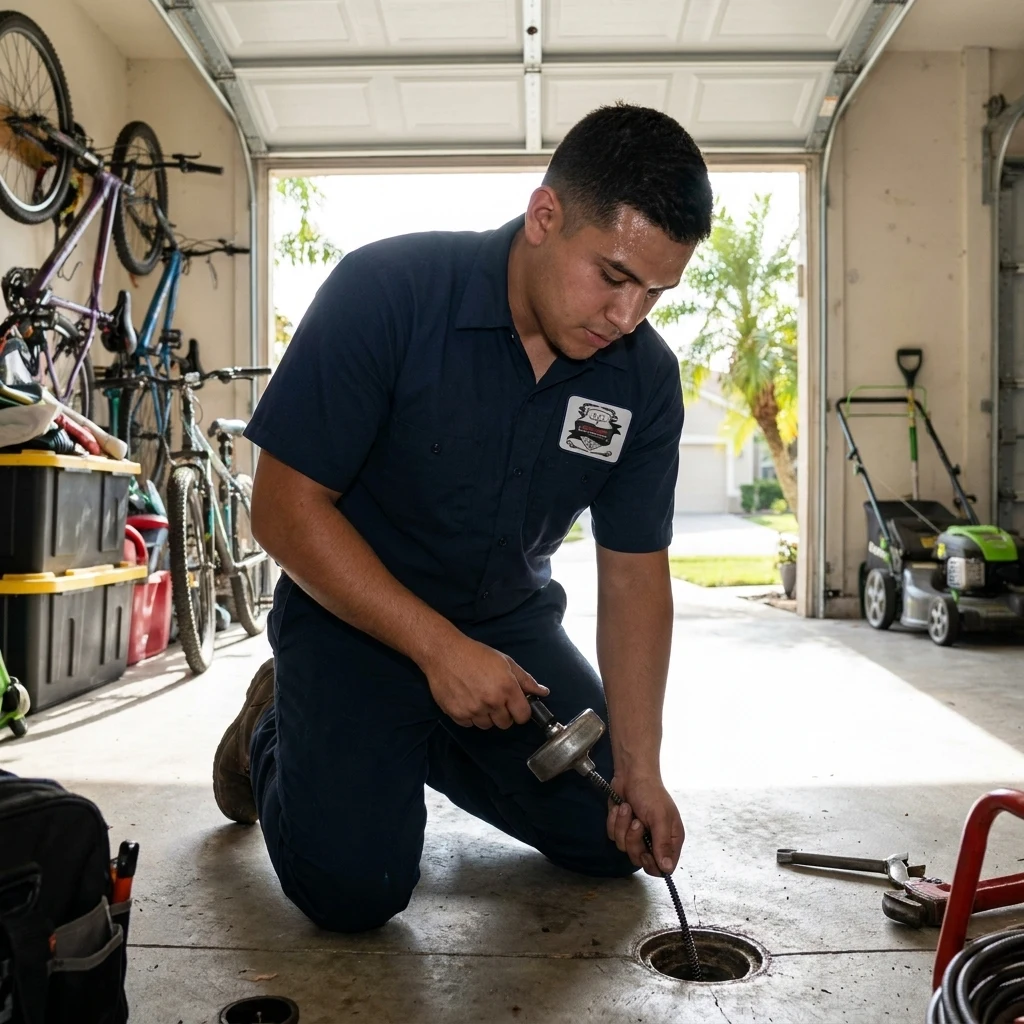
The Low Points: Floor Drains, Laundry and Garage
Water goes to the lowest opening it can find. In most houses that is a ground-floor shower or tub, a laundry standpipe or a garage floor drain. Floor drains are the forgotten ones: the trap dries out, lint and silt collect, and nobody finds out until the day the line runs backward. Pouring a pitcher of water into a rarely used drain each month keeps the trap sealed. Keep boxes and bins off the drain too, because in a backup you want to see it first, not discover it later.
The Day After: A Short Routine
Do not assume the worst, and do not assume nothing happened.
- Check the lowest drains for water, odor or silt. Keep children and pets out of anything that came up from a drain.
- If wastewater is backing up, photograph it and call Water Resources at (813) 307-1000. The county asks that damaged-main backups be reported by phone.
- Follow the county's current notices about water use. Conditions change by outage and neighborhood, and we would rather you follow the people who can see the system.
- Once the county says the main is fine, or if only your house is affected, call us. Silt and debris packed into cleanouts and yard drains, or a line that stays slow, is house-side work.
Our sewer line hydro jetting clears silt and debris from the house line; a standard residential visit is $350 to $650. Coastal communities such as Apollo Beach and Ruskin are where low ground and pumped sewer make the whole routine more worth doing. For the longer rhythm of maintenance, see how often to hydro jet your drains.
None of this makes a house storm-proof. It makes the first hour after a storm calmer, because you already know where the cleanout is, which drains are lowest and who to call. Most of the damage from a backup is done by the delay in figuring that out.
Want a baseline before the next storm?
A camera pass now gives you a dated record of how the line looks when nothing is wrong. We also clear floor and garage drains so they are not full of silt when the water comes.
CALL 813-733-7188Storm and Backup Questions
It is a flap or gate fitted into the house sewer line that stays open for normal flow and closes if flow reverses. The county lists it among suggested property protections. A licensed plumber installs it, and it needs periodic inspection to stay reliable.
It helps when silt, debris or grease is the problem, because the jet washes the house line clean. It will not fix a flooded street main or a lift station outage, which are the county's side of the system.
Call Hillsborough County Water Resources at (813) 307-1000, which takes after-hours emergencies and asks that damaged-main backups be reported by phone. If the county says the main is fine, our line at 813-733-7188 covers the house side.
Use the county's lookup at HCFL.gov/HEAT. The A through E evacuation zones are different from flood zones, and mobile and manufactured homes are all treated as Zone A. We do not know the zone of any individual Riverview street.