Sewer Line Hydro Jetting in Riverview, FL
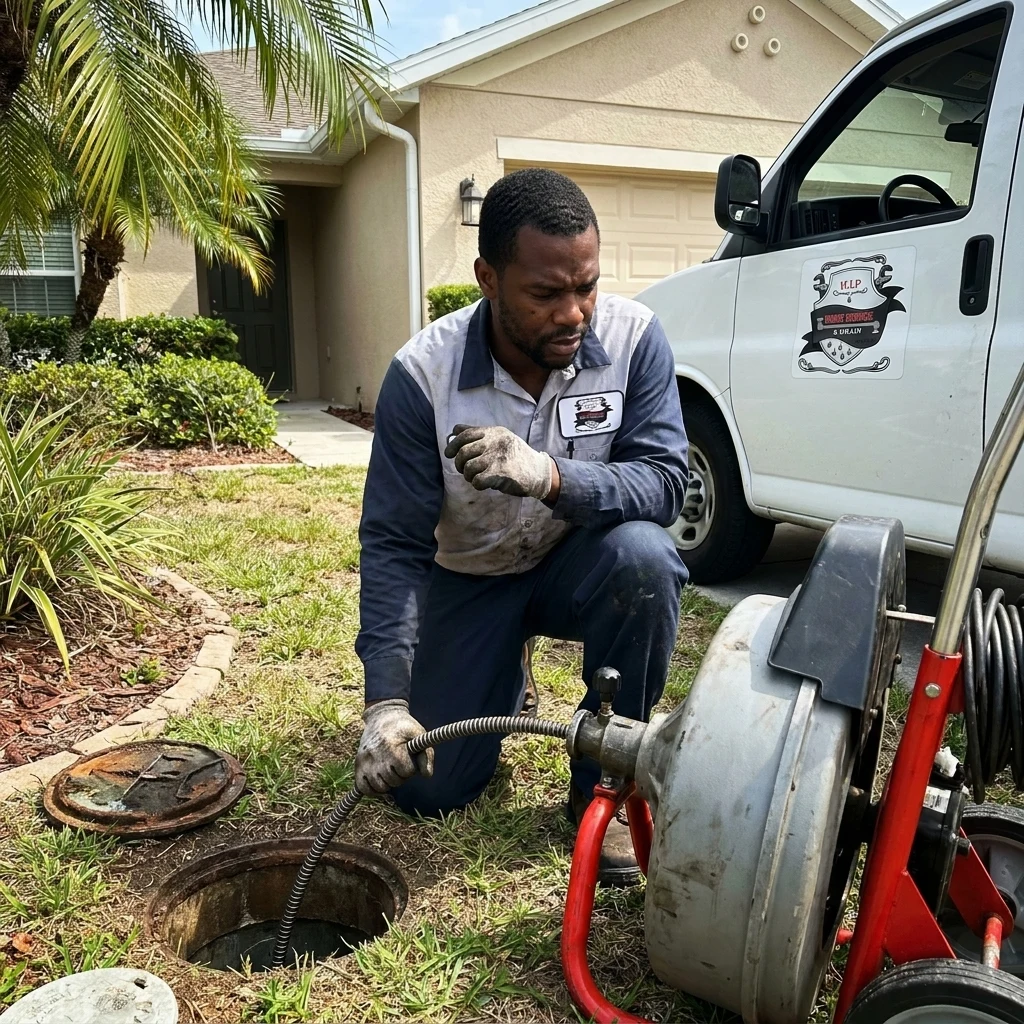
Every drain in a house meets in a single pipe that runs out to the county main under the street. When that pipe narrows, nothing is wrong with the fixtures: a tub gurgles when the washer drains, a toilet burps, a floor drain holds water. The first place to look is the outdoor cleanout, a capped pipe near the house. Water standing in it points downstream of the house.
Our sewer line work washes that run with a long hose and a rotating nozzle, working from the cleanout toward the street connection. It is same-day, priced in writing first, and a camera pass can show you what the footage looks like before and after.
Signs the Trouble Is in the Lateral, Not the Fixtures
One slow drain is a fixture problem. This pattern is a sewer line problem:
- Two or more drains slow at the same time
- Toilets burp or bubble when the washer or a shower drains
- Water stands in the outdoor cleanout or rises when you flush
- The lowest drain in the house, often a shower or floor drain, backs up first
- Backups that show up after days of rain
- A cable clears things, then the same slowness returns within weeks
New Builds and Older Sections Clog for Different Reasons
Roughly 70 percent of Riverview’s housing units were built from 2000 on, and nearly 9 percent from 2020. A new build has clean plastic pipe, so the trouble is what got left in it: construction grit, a joint sitting a hair low, wipes and grease from the first years. Around Boyette Springs, with plats from 1986 to 2000, and the older parts of Summerfield, laterals are 25 to 40 years old and likelier to carry roots at joints or scale. The camera tells you which story you have.
Then there is the ground. Mapped soils in parts of Riverview are poorly drained fine sands with a water table about a foot or two down, and June through September delivers about 61 percent of the year’s rain (32.57 of 53.59 inches in the National Weather Service Ruskin normals). Wet ground presses on joints, so a lateral with a belly or a loose joint complains first. After Hurricane Milton in October 2024, about 700 of the county’s nearly 900 lift stations lost power and some homes saw backups. Our wet-season backup article goes deeper.
Sewer Line Jetting Cost, and When to Call the County First
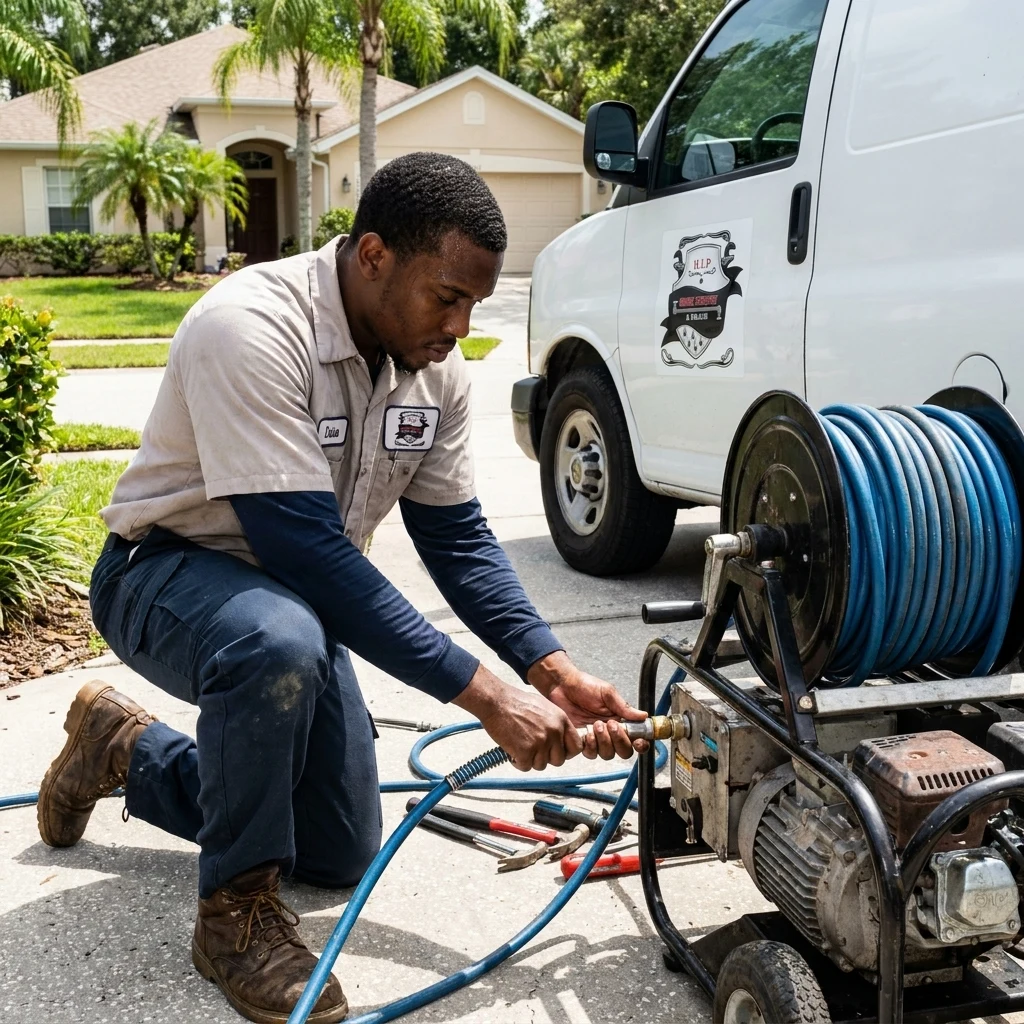
Cabling a main line runs $225 to $450. Jetting it with moderate roots in the way runs $400 to $750, and the written figure arrives before the hose goes in. Drop a camera in for $150 to $300 if you would like to see the pipe first.
Here is when this is the wrong call. If neighbors are backing up too, or the street manhole is full while your cleanout is dry, the blockage is probably in the county main, not your line. For a damaged main backing up into a house, Hillsborough County Water Resources asks for a phone call to (813) 307-1000 rather than the online form. Jetting also cannot fix a cracked, collapsed or badly offset pipe. If the camera shows one, we say so and send you to a repair contractor.
Riverview Sewer Line Jetting: Low Ground and Long Laterals
A sewer line carries the whole house, so long runs and wet ground matter more here than on a kitchen branch. These sections sit low, near water, or on larger lots.
- Panther Trace, Phase 2B-3 — One of ten Panther Trace plats is centered in FEMA Zone A: this one, 100 lots. Low lots like these make a clean main worth having before wet season.
- Summerfield Village 1, Tract 18 — 107 lots recorded in 2006 and centered in FEMA Zone AE, a special flood hazard area. Wet-weather inflow may play a part when a line here slows.
- South Fork — 12 of its 21 plats sit on poorly drained Myakka fine sand, all in FEMA Zone X. A high water table keeps pipe joints wet through the rainy season.
- Triple Creek — A 969-acre wetland preserve is next door. Rainy-season high water can lean on buried lines, so a camera-guided sewer line pass shows what is actually inside.
- Magnolia Park, Southeast B — Mapped as poorly drained Myakka fine sand at about 20.6 feet elevation, FEMA Zone X, with Riverview 33578 mailing addresses. Wet-season saturation is the thing to watch.
- Apollo Beach canal streets — The community has about 55 miles of canals at roughly 7 feet elevation. Surge exposure and silt in cleanouts shape how a lateral gets washed.
- Bell Creek Hammock — Lots run from 0.33 to 3.67 acres, so house-to-street runs can be long. Ask whether a given lot is on sewer or septic before booking.
- Gibsonton — The county says most of the area lacks central sewer, and its vacuum conversion runs gravity lines to valve pits. On septic lots, jetting stays on the house-to-tank line.
Rivers, Pump Stations and Highways for Riverview Sewer Line Jetting
Sewer work in this territory is shaped by the Alafia and Little Manatee rivers and by the county’s own pump network.
- Alafia River — Flows through the northern part of Riverview. The NWS gauge is at Lithia Pinecrest Road, and FEMA maps an AE floodway at the US-301 crossing.
- Balm Road Super Lift Station — Rated at 56 MGD and included in the county’s $1.2 billion One Water wastewater conveyance and treatment program.
- Big Bend Road (CR 672) — The county’s One Water force main along Balm Riverview Road connects near Big Bend Road on its way to the Balm Road station.
- Symmes Road and US-301 — Rivercrest sits on US-301 south of Symmes Road; its lakes were sized for a 25-year storm, roughly 12 inches in 72 hours.
- US-41 — The coastal corridor through Gibsonton, Apollo Beach and Ruskin, where elevation runs from about 3 feet at Ruskin to 10 feet at Gibsonton.
- I-75 Exit 250 (Gibsonton Drive) — The way into Gibsonton, where the county’s four-phase vacuum septic-to-sewer project is planned and the Alafia River and Bullfrog Creek are local landmarks.
- Little Manatee River — Runs through Ruskin at about 3.3 feet elevation, beside Little Manatee River State Park.
Rainfall, Flood and Blockage Numbers for Riverview Sewer Line Jetting
Wet seasons and storm years are when sewer lines in this part of Hillsborough County show their weak points.
- In EPA’s 2004 Report to Congress, communities reporting more than 100 sewer overflow events a year blamed blockages for 74 percent of them and wet weather or inflow and infiltration for 14 percent. Blockages dominate, and rain is the second driver, so clearing the line and checking for ground water entry go hand in hand.
- The NWS Ruskin normals for 1991 to 2020 show 53.59 inches of rain a year, with 32.57 inches, about 61 percent, falling from June through September. Rain concentrates in the wet season, when high ground water can enter weak joints, so a line cleared and checked beforehand heads into summer in better shape.
- Hurricane Milton dropped 11.91 inches of rain on Riverview in October 2024, and about 700 of the county’s nearly 900 lift stations lost power on October 10. The county said stormwater got into the sewer system and caused manhole overflows and some home backups, which is a reason to know your line’s condition before a storm.
- The Alafia River at Lithia reached 24.36 feet on October 11, 2024, against an NWS flood stage of 13 feet and a major flood stage of 19 feet. Floodwater and saturated ground are when cracked joints and sags show up as backups, so a river that high is a good prompt to check a line.
- The Florida Building Code, Plumbing sets a minimum slope of 1/8 inch per foot for horizontal drains of 3 to 6 inches, about one inch of fall every eight feet. On a gentle slope a sag can hold water and solids, and a camera pass shows whether jetting will clear it or the pipe needs repair.
Water standing in the cleanout?
Call now and tell us what the outdoor cleanout looks like and which drains gurgle. We will say whether it sounds like your line or the county main before anyone is booked.
CALL 813-733-7188Neighborhoods Where Laterals Get Washed Out
House-line jetting is most often the question in low, flat or fast-growing ground, such as Riverview, Apollo Beach, Ruskin, Gibsonton, Progress Village, Bell Creek, Rivercrest, Triple Creek, Magnolia Park and Ayersworth. If your community is not listed, the lateral still runs from your cleanout to the same kind of street main.
Lateral and Main Line Questions
Check the outdoor cleanout and ask the neighbors. Water standing in your cleanout while the street is quiet points at your line. Several houses backing up at once points at the main, and the county number is (813) 307-1000. Tell us what you see by phone and we will say which it sounds like.
Sometimes, and sooner than people expect. Builder grit, a settled joint or early wipes and grease can restrict new plastic pipe. If a young line keeps backing up, a camera visit first shows whether it is a washable restriction or a low spot where water will keep pooling.
Usually it can push through a sag, but it cannot remove one. Water and solids still settle in the dip afterward. The camera shows how deep it is. A mild belly may be managed with periodic cleaning, while a bad one belongs with a repair contractor.
We work on your side: the cleanout, the house line and the connection toward the street. If the hose or camera suggests the stoppage is out in the county main, we tell you and give you the Water Resources number instead of billing you for more passes.
A backflow valve is a plumber’s installation, not ours. The county lists sewer backflow valves among the protections for flood-prone property. If you want one, we can camera the lateral first so the plumber sees the pipe, and our hurricane season prep article covers the rest.